$6.14
$7.67
50% OFF! Hot items selling fast—Grab them before they're gone!
 Unconditional Satisfaction GuaranteeNo Shipping Fees Above 302 Months to Decide. Returns Simplified.
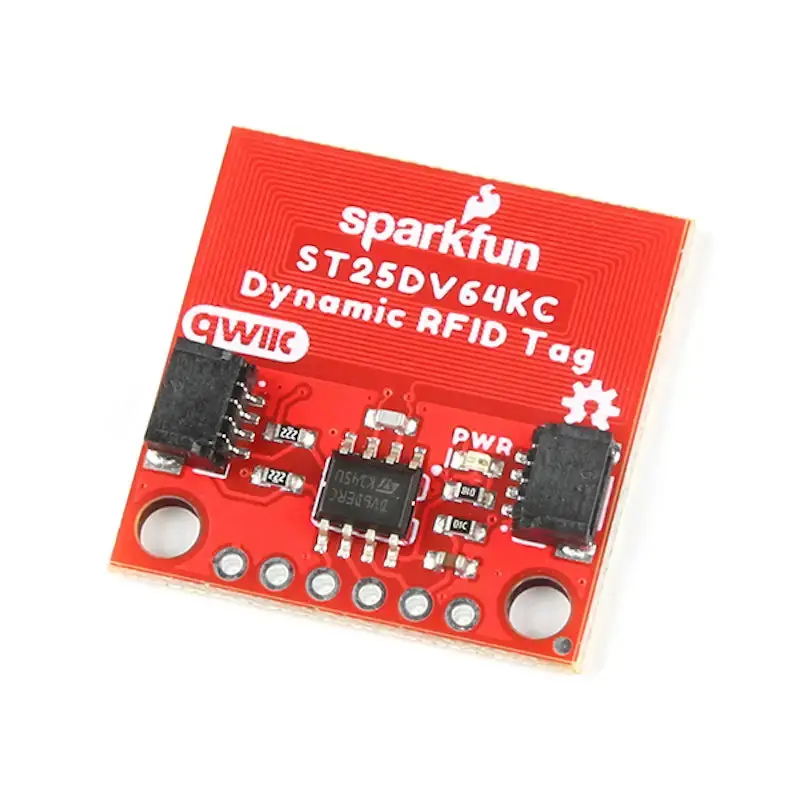
The Sparkfun Qwiic Dynamic NFC/RFID Tag Module offers a seamless and efficient solution for various contactless applications. This high-performance module is based on the ISO/IEC 15693 standard and is certified as an NFC Forum Type 5 tag by the NFC Forum. It supports all ISO/IEC 15693 modulations, coding, sub-carrier modes, and data rates, ensuring compatibility with a wide range of devices and systems.
The module boasts a custom fast read access of up to 53 kbit/s and features a 64-kBit (8-kByte) EEPROM memory for storing data. The I2C interface allows for byte-level access, while the RF interface provides block-level access to 4-byte blocks. With a typical write time of 5 ms for 1 up to 16 bytes from I2C and 5 ms for 1 block from RF, this module ensures quick and efficient data transfer.
Designed for long-term use, the Qwiic Dynamic NFC/RFID Tag Module offers a data retention period of 40 years and a write cycle endurance of 400k to 1 million, depending on temperature. To ensure data security, the module features one to four configurable areas for user memory protection, which can be safeguarded in read and/or write by three 64-bit passwords in RF and one 64-bit password in I2C.
Additional features of the module include a General Purpose Output (GPO) pin, an interrupt pin configurable on multiple RF and I2C events, and energy harvesting capabilities. The supply voltage ranges from 1.8V Min to 5.5V Max, with the Qwiic bus operating at a maximum of 3.3V. The I2C addresses for user memory, system memory, RF switch off, and RF switch on are 0x53, 0x57, 0x51, and 0x55, respectively.
With its advanced features and robust performance, the Qwiic Dynamic NFC/RFID Tag Module is an ideal choice for a wide range of contactless applications in various industries.
View moreWhat’s Included
Links
Websites
Multimedia
docReady(function() {$(‘button[aria-controls=unique-tab-5]’).one(‘click’,function() {$(“#iframe-video-1”).html(‘‘);})});Specifications
ST25DV64KC:
Arduino Library: