$19.55
$24.44
50% OFF! Hot items selling fast—Grab them before they're gone!
 Unconditional Satisfaction GuaranteeNo Shipping Fees Above 302 Months to Decide. Returns Simplified.
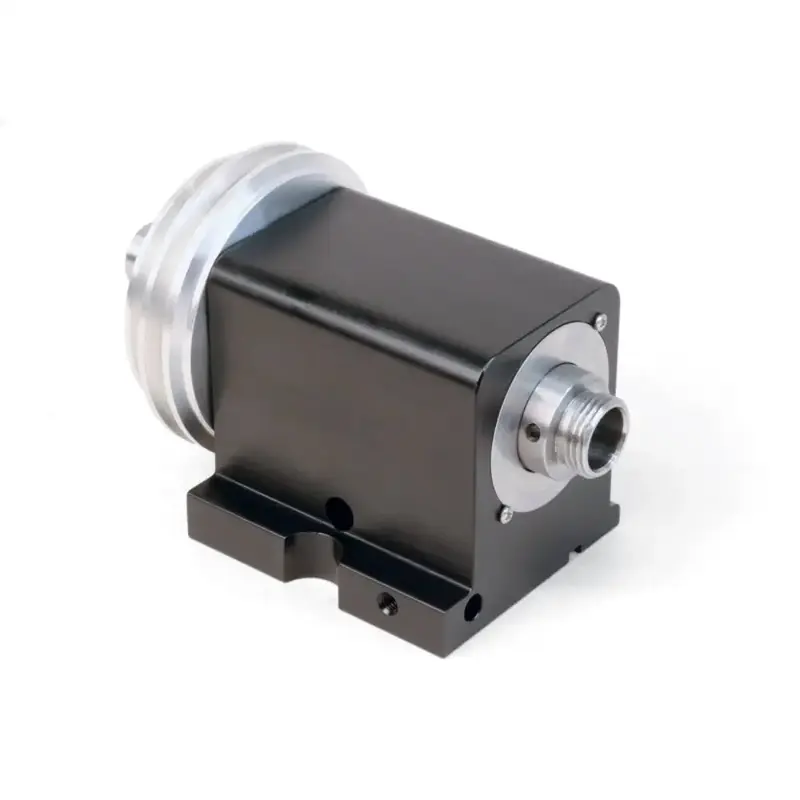
The Sherline 9/16″ Through-Hole Spindle Headstock is engineered to accommodate larger stock by featuring a maximum through-hole diameter of 9/16 inches (14.28 mm). This design modification, however, results in the elimination of the #1 Morse internal taper, thereby restricting the use of tapered tools such as drill chucks and fly cutters. Nonetheless, threaded tools, including 3 or 4-jaw chucks and end mill holders, remain compatible with this headstock. The headstock is equipped with a spindle pulley and a precision ground head key, ensuring reliable performance.
The headstock is available with two classes of bearings: Class 3 and Class 5. Class 3 bearings have been a standard choice, offering dependable service over the years. In contrast, Class 5 bearings, although more costly, provide enhanced smoothness, quietness, and cooler operation, making them particularly suitable for industrial applications. The Class 5 headstocks incorporate two 20 mm, lifetime-lubricated ball bearings with an adjustable preload nut, factory-set to .0002 inches (.005 mm) of endplay. This configuration is ideal for extended operations at speeds up to 4000 RPM, with the option to adjust the preload for higher speeds up to 10,000 RPM.
An optional DC motor with a sophisticated speed control unit can be integrated with the headstock. This motor delivers maximum torque at low RPM, which is crucial for machining tasks, and operates more smoothly and quietly compared to an AC/DC motor of similar or larger size. The speed control unit is versatile, accepting AC currents ranging from 100 VAC to 240 VAC, 50 or 60 Hz, and converting it to 90V DC for the motor, allowing for global usage without the need for a transformer. The speed can be adjusted using a control knob, with a range of 70 to 2,800 RPM in the normal pulley position, and a reduced maximum speed in the high torque position, enhancing torque at any given speed.
View moreWhat’s Included
Multimedia
docReady(function() {$(‘button[aria-controls=unique-tab-5]’).one(‘click’,function() {$(“#iframe-video-1”).html(‘‘);})});Specifications